


From Sun to Shade: Designing Outdoor Spaces Filipinos Actually Use in Summer

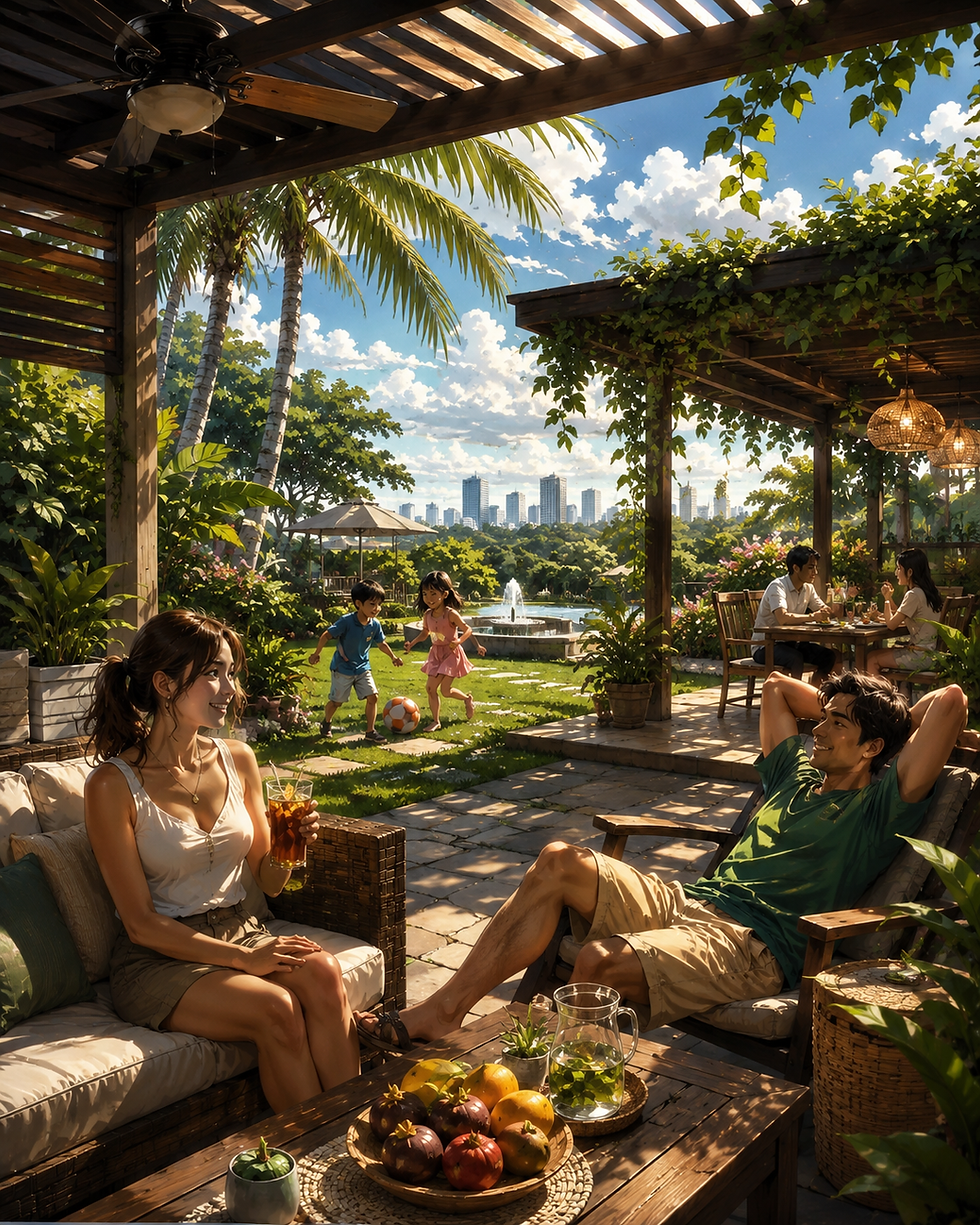
Summer in the Philippines is not just a season — it’s a design problem waiting to be solved. Hotter days, stronger sun, and rising urban heat mean outdoor rooms must be planned, not improvised. This guide gives practical, buildable strategies for turning yards, terraces, and balconies into comfortable, usable outdoor living spaces that perform in our tropical climate — without breaking the bank.
Why design for shade matters (quick reality)
Mean national temperatures peak in May and average around 28°C, with local highs regularly in the low-to-mid 30s; heat and humidity are increasing due to climate change. Designing outdoor spaces to reduce direct sun, trap cool breezes, and manage humidity extends usable hours and reduces energy use indoors.
Four guiding principles (simple and actionable)
Control the sun, not the light. Block direct rays at peak hours while preserving daylight and views. Use overhangs, louvers, and vegetation to filter sunlight.
Make microclimates. Create shaded pockets that feel cooler than the surrounding areas: pergolas with vines, green screens, or shady trees over seating. Semi-open spaces (courtyards, breezeways) form natural microclimates.
Prioritize airflow. Orient openings and pathways to capture prevailing winds (Amihan/Habagat wind patterns) and avoid dead-air corners. Stack ventilation and high ceilings for heat to escape.
Think layered shade. Combine hard shading (roof/trellis), soft shading (plants), and movable shading (screens, umbrellas) so the space can adapt to the time of day and activity.
Proven shading strategies — what to build and why
1. Deep overhangs & roofed terraces
A continuous roof extension or wide eaves blocks high-angle summer sun and lets low-angle winter light in. For patios, a roofed terrace works like an ‘outdoor room’ that’s usable in both sun and light rain. Use lightweight roofing materials over a ventilated deck to avoid heat buildup.
2. Adjustable louvers and screens
Adjustable aluminum or timber louvers let owners tune sun and privacy throughout the day. Motorized options give convenience; manual is lower-cost and durable. Louvers placed at the perimeter of balconies reduce glare while still allowing cross-ventilation.
3. Pergolas + climbers = fast shade
A pergola with native climbing plants can deliver shade within 2–4 seasons. Use modular pergolas with removable polycarbonate panels for rainy days; add retractable fabric for instant sun control.
4. Trees and layered planting
Planting medium-to-large native shade trees around seating reduces temperature and improves comfort. Use a layered palette: canopy trees for shade, mid-layer shrubs for screening, and groundcovers to reduce reflected heat. Native species are better adapted and lower-maintenance.
5. Water features & evaporative cooling (carefully)
Small water features (shallow fountains, wet planters) create localized cooling through evaporation. In humid inland areas, keep features shallow and shaded to avoid mosquito issues — choose recirculating systems with insect-proofing.
6. Surface choices — reflect, don’t fry
Use light-toned, permeable paving (porous concrete, stabilized gravel, timber decking) to reduce heat reflection. Avoid large expanses of dark, sealed asphalt or tiles that store and radiate heat into seating zones.
Quick checklist for a summer-ready outdoor space
Orient seating to avoid west-facing late-afternoon sun.
Combine permanent shade (roof/pergola) + flexible shade (umbrella/screens).
Plant at least one canopy tree for every 30–50 m² of yard where possible; prefer natives.
Use cross-ventilation paths and avoid blocking prevailing breezes.
Pick breathable textiles and rust-resistant hardware for outdoor furniture (heat + humidity).
Add thoughtful lighting for evening use — shielded downlights and warm tones to keep spaces intimate.
Philippines-friendly plant suggestions (start here)
(Choose species suited to your lot size, soil, and site conditions. Consult a local nursery or the DENR guidebook for planting specs.) The DENR urban greening guide lists species suited for shade, screening, and urban planting — prioritize natives for resilience and low maintenance.
Real-life examples of outdoor programming
Alfresco dining nook: under a roofed terrace plus perimeter louvers; ceiling fan or natural airflow path.
Play-and-shade lawn: tree canopy, permeable turf, and a soft-edge sand/play strip.
Quiet reading courtyard: deep shade, layered planting for sound buffering, and a shallow water bowl.
Architectural moves that help all three: orient the house to funnel breezes into outdoor rooms, design transitions (sliding doors/ screens) that connect indoor and outdoor, and use materials that age gracefully in heat and humidity.
Budget-minded tips
Start with shade, then add finishes: a mature tree or a simple pergola gives more comfort than premium decking.
Use modular systems (prefab pergolas, demountable screens) to spread cost and allow upgrades.
Prioritize high-impact items: canopy tree, roofed seating, and ventilation paths.
The sustainability win
Shaded outdoor rooms reduce cooling loads inside by blocking solar gain and encouraging occupants to use outdoor space rather than air-conditioned interiors. Planting native trees improves urban biodiversity and long-term resilience against heat waves.
Want a site-specific layout or a phased implementation plan for your property? At KDA D+A, we design outdoor rooms that suit Philippine summers: shaded, ventilated, and built for real life. Visit kdadesignarch.com or email us at kristofferaquino@gmail.com to book a quick consultation. We’ll turn your yard into the summer space your family will actually use.
References
Climate of the Philippines — PAGASA, DOST.
Climate change and temperature trends — PAGASA.
Sustainable Building Design for Tropical Climates — UN-Habitat (passive strategies, shading, ventilation).
“7 Bioclimatic Façade Strategies for Tropical Architecture” — ArchDaily (orientation, louvers, façade moves).
Philippine Guidebook on Plant Species Suitable for Urban Greening — DENR Forest Management Bureau.
“Designing with Humidity” / Semi-open spaces and microclimates — ArchDaily.


Comments